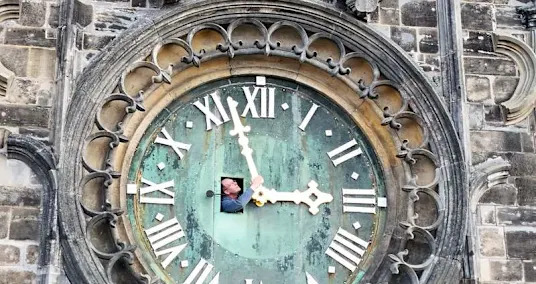
Clocks across the majority of European countries are set to go forward by one hour early on Sunday as the continent moves to daylight saving time, also known as summer time.
Clocks in most European nations including Germany advance by one hour at 2 am (0100 GMT) to 3 am, heralding longer evenings and brighter days.
This means that for the coming months parts of Europe will be on Central European Summer Time (CEST), before moving back to Central European Time (CET) in the autumn, when clocks go back again by an hour on October 25.
The aim of the change is to make better use of daylight in the shorter days of the winter in the northern hemisphere.
The signal for the automatic changeover of the clocks in Germany comes from the Federal Institute of Physics and Metrology (PTB) in the northern city of Braunschweig, also known as Brunswick in English.
The institute's experts ensure that radio-controlled clocks, station clocks and many industrial clocks are supplied with the signal via a long-wave transmitter called DCF77 in Mainflingen near Frankfurt.
latest_posts
- 1
 Israel’s mixed messaging on Christmas draws controversy
 - 2A Sweet Choice: Pick Your #1 Cake!
- 3Warship sunk by British fleet, remains of sailor found after 225 years
- 4Mars spacecraft images pinpoint comet 3I/ATLAS's path with 10x higher accuracy. This could help us protect Earth someday
- 5Astronomers discover never-before-seen celestial object: "Cloud 9"





- Support Your Investment funds with These Individual accounting Thoughts
- FDA proposes use of sunscreen ingredient popular in other countries
- Extravagance SUVs for Seniors: Solace, Innovation, and Security
- Katz alleges Army Radio workers misled High Court in bid to halt closure
- Experiences in Natural life Protection: Individual Progressives' Excursions
- Between 600 to 800 aid trucks entering Gaza daily since start of ceasefire, COGAT confirms
- Iranian-linked drone attack kills Kurdish couple in northern Iraq
- Was This Driver Simply Having A great time Or Behaving Like An Ass?
- ‘Democratizing space’ is more than just adding new players – it comes with questions around sustainability and sovereignty